Red Smith once said, “Writing is easy. All you have to do is sit down at a typewriter and open a vein.” The exploration of pain and the potency of melancholia in poetry is not a new concept. I stumbled across a petite volume nestled between many others in my school library just yesterday. “A Selective Anthology of American Poetry.” So far, I have read two verses by Dickinson and Walt Whitman. Two poems, two definitions of pain.

Following the rise of American Poetry and transcendentalism, (a romantic philosophy of poetry founded by Ralph Waldo Emmerson), Emily Dickinson was a booming voice of impact in the nineteenth century. She’s said to be beyond her times. Walt Whitman’s verses ring of passionate earnestness. He was proud of America, and he would have been ever so proud of Emily Dickinson.
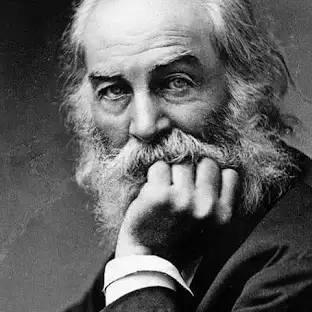

Uncle Walt’s message to death:
“All over bouqets of roses,
O death,I cover you over with roses and early lilies,
But mostly and now the lilac the blooms the first,
Copious I break, the springs from the bushes,
with loaded arms I come, pouring for you,
For you and the coffins all of you O death.“
Whom does Uncle Walt mourn so deeply? For this is a long poem, perhaps because it was written as a tribute to the deceased President Abraham Lincoln after his assassination. What does his message contain? The coffins are adorned with lilacs, roses and lilies. “Copious”, meaning abundant, plentiful. Much like the springs and flowers abound amongst the bushes, which the mourning soul (the poet) breaks so as to shower death with love. Optimistically, I can only pray that Uncle Walt is glad to mourn amidst the green of the forest, unless he believes all of the natural world should bend its neck in a gesture of grief. Another word for sad? Morose. Nature accompanies the grieving populace as they mourn their deceased president. Now who the hell has the time to mourn the deceased soul? Particularly when the human body remains intact and unharmed?

I felt a funeral in my brain (Emily Dickinson)
I felt a Funeral, in my Brain,
And Mourners to and fro
Kept treading – treading – till it seemed
That Sense was breaking through –
And when they all were seated,
A Service, like a Drum –
Kept beating – beating – till I thought
My mind was going numb –
And then I heard them lift a Box
And creak across my Soul
With those same Boots of Lead, again,
Then Space – began to toll,
As all the Heavens were a Bell,
And Being, but an Ear,
And I, and Silence, some strange Race,
Wrecked, solitary, here –
And then a Plank in Reason, broke,
And I dropped down, and down –
And hit a World, at every plunge,
And Finished knowing – then –
Dickinson loved to explore the trenches of pain. She held up the mirror to the bruised heart, burning cold, oozing puss from its wounds. (I like that, “burning coldly. I’ll save that for later.) It’s presumed that here, she’s not talking about a funeral at all, but melancholia. She’s dancing her descent into madness, she’s framing her senile, gibberish thoughts into verse. Basically, she’s telling the story of how she lost her mind. Slowly, she felt the layers of paint, all the stockpiles of experience and reasoning die, and like drum-beatings and processions chaos ensued within her. Comrades paid homage to her dance of madness, to her inevitable death, and all the world attended her funeral. In her mind, she was stripped bare of all agency and control as the bells of her sanity rang, and all she could do was listen. Finally, the floor gave way beneath her, and she fell into, not an abyss, but into a kaleidoscopic myriad of worlds, falling amongst the very lives she had lived and the very empires she had built. It was all very dramatic for many of her relatives, the attendees.
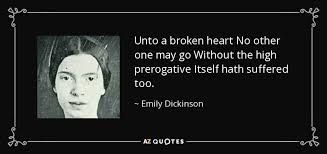
Poets are naturally strong human beings. For they turn their pain and chaos into something tangible and worth reading. They make money and score interviews, even their next meal and their fancy mansion through their nights of depression. The question I want to ask is, are these spectacularly raw and geniusly crafted verses products of mad ramblings of the mind or of calculated word-play and critical and clear-minded thinking? Did the poet sit down with the singular purpose to define pain or did the definition of pain force itself out of them? I suppose I will only find out when it happens to me. There could even be a third scenario where they cried the night and sat down at the desk the next morning. But would the emotion still be fresh that way? All I can say is, poems written in a state of delusion and those written in a state of genius are both different and special in their own merit.
To conclude this, I’d like you to guess what state of mind was Maya Angelou in when she wrote “Still I rise.” I envision her feeling awfully smug and haughty about something, or someone, when she wrote these lines:
You may write me down in history
With your bitter, twisted lies,
You may trod me in the very dirt
But still, like dust, I’ll rise.
Does my sassiness upset you?
Why are you beset with gloom?
’Cause I walk like I’ve got oil wells
Pumping in my living room.
Just like moons and like suns,
With the certainty of tides,
Just like hopes springing high,
Still I’ll rise.
Did you want to see me broken?
Bowed head and lowered eyes?
Shoulders falling down like teardrops,
Weakened by my soulful cries?
Does my haughtiness offend you?
Don’t you take it awful hard
’Cause I laugh like I’ve got gold mines
Diggin’ in my own backyard.
You may shoot me with your words,
You may cut me with your eyes,
You may kill me with your hatefulness,
But still, like air, I’ll rise.
Does my sexiness upset you?
Does it come as a surprise
That I dance like I’ve got diamonds
At the meeting of my thighs?
Out of the huts of history’s shame
I rise
Up from a past that’s rooted in pain
I rise
I’m a black ocean, leaping and wide,
Welling and swelling I bear in the tide.
Leaving behind nights of terror and fear
I rise
Into a daybreak that’s wondrously clear
I rise
Bringing the gifts that my ancestors gave,
I am the dream and the hope of the slave.
I rise
I rise
I rise.
 Story Scientist
Leave a Reply