Imagine: You’re on the cusp of your next big story idea, and you think to yourself, “Why don’t I take this to the next level?”. So you go ahead and enter a short story contest. You sit down at your desk, coffee in hand, playlist open, and begin to write. Your fingers fly over the keyboard, words streaming across the google docs in a dizzied frenzy. And when you’re finished, you lean back, content with your passionate 5,000-word masterpiece, only to read the competition guidelines: ‘2000 words only’.

If you, as a fiction writer, have felt this pain before, you’re not alone. People often classify word-limits as an aspect of academic or ‘scholarly’ writing. Article writers, essayists, and bloggers are very familiar with mercilessly cutting down their profound pieces to fit an unjust word-count. But I’ve discovered that this phenomenon also finds its footing in the world of creative storytelling, especially when writing for competitions like the Reedsy Literary Contests or the BWW Short Story Award. While setting word-limits for personal projects (novels and short stories) is not always recommended, writing for flash-fiction contests and story competitions with strict word-counts, might just be the practice that hones a storyteller’s skill, precision, and prose to perfection. Here, are my three arguments for the same:
- Limits Equal Creative Freedom
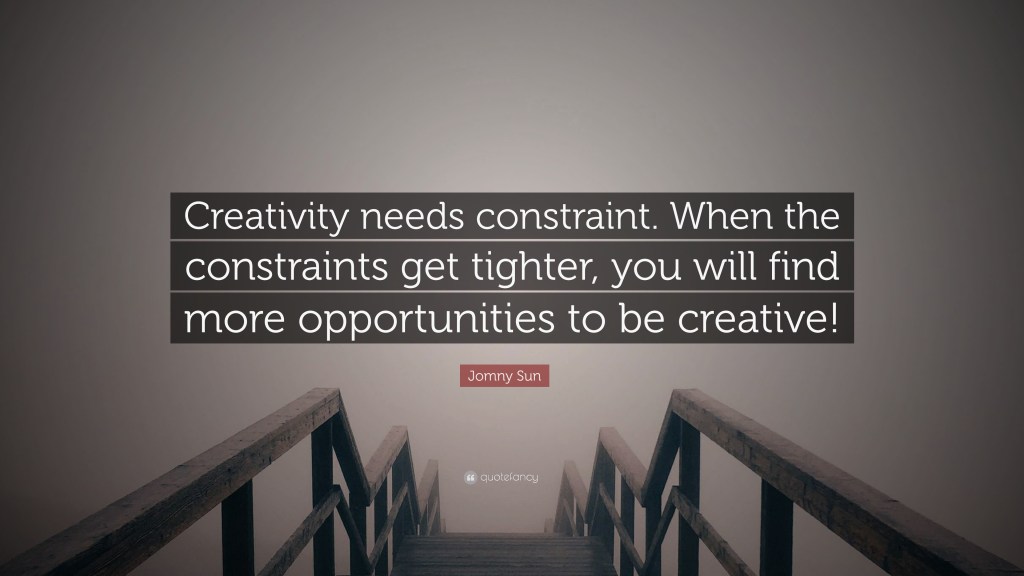
Contradictory, I know. A quote by Walter Darby Bannard goes: ““Limitation of means is a precondition of excellence. Creative freedom chooses its limitations. Destructive freedom rejects them heedlessly.”
There’s a common misconception that limiting yourself to select themes, genres, word counts, or prompts can rob you of the creative freedom to let your imagination run wild. However, we’ve all felt the looming dread of the blank page and zero word-count, and we’ve all turned to external sources of inspiration once in our lives. Be it Pinterest boards or Oxford Website Prompts. This is because, contrary to popular belief, more choices make you less likely to choose anything at all. Limits and word-counts can be used to narrow down your options and give you clarity. Therefore just like pinterest prompts, tracking word-counts doesn’t mean we’re restricting our creative flow. Rather, we’re placing safeguards that allow us to move freely within a manageable space.
2. Redundancy Is Your Enemy
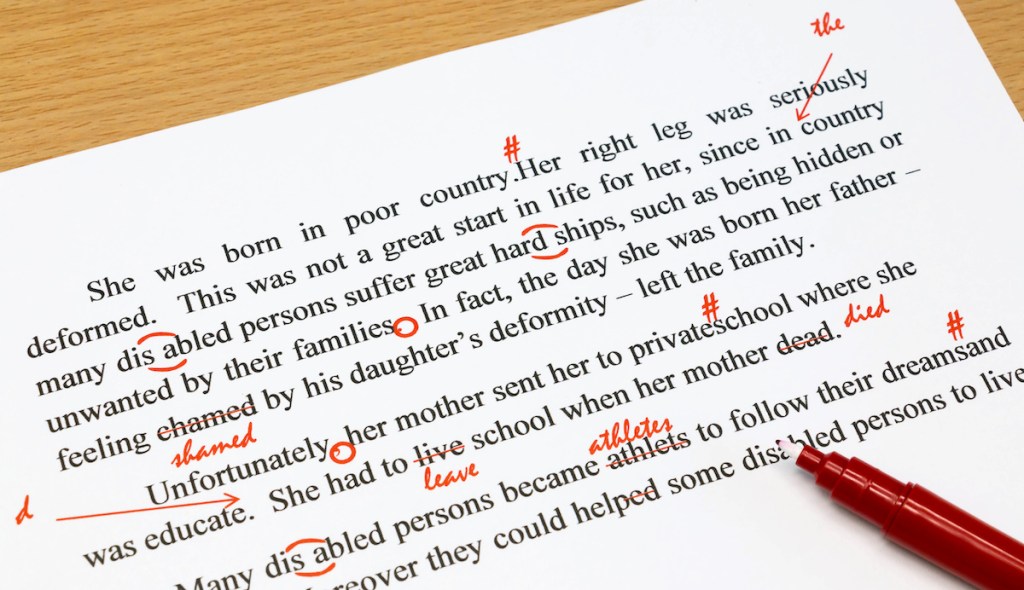
This week I wrote a short story using the Reedsy weekly prompts under 3,000 words. The problem was, my first draft was a 4,000-word fluff piece. There was only so much revision of the story I could do without compromising on the quality. Therefore majority of the cuts were made through continuous line editing and proofreading. After three days of editing, when I sat down for my final proofread, I realized something amazing. Meticulously scanning the story for filter words, redundant adverbs, unnecessary dialogue tags and whittling down my descriptions, forced me to ensure that every line retained in the final draft played a necessary purpose. In this day and age, making sure that nothing in your writing feels like it’s wasting the reader’s time is crucial, because not only are attention-spans shorter, people have less time on their hands. So to make sure that the reader doesn’t end up skimming over any part in frustration, making a dent in your word count with line editing is a vital part of the writing process.
3. The Magic of Pacing

Stories rarely follow the natural flow of time, even when they play out chronologically. A conversation in a room can last chapters, while an intergalactic battle can be flashed across the reader’s vision in a verbal montage. Everywhere you go, ‘pacing’ is defined as the ‘speed at which a story unfolds’. While this is true, pacing is not dependent only on plot devices. Particularly in written works, pacing lies in the prose. Pause and describe every scene at length, and sequences feel even longer to the reader than they are in real-time. On the flip side, fire through the dialogue and setting, and the scene instantly quickens. Therefore, while cutting out vivid and immersive descriptions in your story might feel like sacrilege, it gives you the opportunity to decide what moments you want to highlight in your story, and which ones you want to go by quickly. In the long run, all of it makes your story more dynamic.
And there you have it! My reasons for choosing to practice writing with austere, limiting, and flash-fiction storytelling. While I don’t set strict word-counts for all projects, challening myself to condense a story every once in a while keeps my prose sharp, my editing smooth, and my technique intact. Even if the story ends up deviating from my original vision, it adds to my repertoire of practice, and makes me a better writer.
 Story Scientist
Leave a Reply