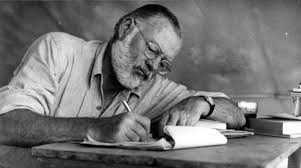
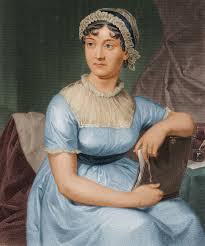
Writing style: The all-too-elusive, deceptive, seductive term generously thrown around and exchanged in the writing world; it’s part of the writer’s template, right? I don’t mean the writing styles like persuasive writing, narrative writing or expository writing. I mean the eye-catching, revealing, identifiable characteristic that readers like us all around the world associate with our favorite authors. We associate clarity, to-the-point and simple syntax with Ernest Hemmingway; wit, whimsical aesthetics, sarcasm, humor, abstraction, profound insight and realism with Jane Austen’s prose; vivid, concrete and detailed description and accessible prose with J.K Rowling’s Harry Potter. The point is, the all-dominating “writing style” has always been the one to distinguish an author’s unique voice, and is said to be the “mark of a seasoned writer”.
But now the question lies: well, if every writing style under the sky such as “minimalistic” or “romantic” or “philosophical” or “abstract” has been claimed and owned by the writing maestros of the past, what are the newbies supposed to do? It’s a genuine question, because a number of great authors such as J.K Rowling and Jane Austen have made their mark in the literary world through the sheer originality and novelty of their work. The point being, nobody had done something quite like them before. But here in 2024, you don’t know what kind of “unique prose” can make you stand out from the crowd or be your own to claim, as, say it with me: everything has been done before, right?


So the solution seems simple: read more. Read, read, read more authors and borrow their styles, emulate the way they wrote descriptions; the way Hemmingway would clear-cut point out the specifics and the concretized details of his character’s morning routine in an unpretentious paragraph, you too begin to meticulously cut and shed your intricate descriptions of the space-ship or the castle or the farm or the bedroom to simple three-liner paragraphs having a limited word-count. The result? Creative hemorrhage, messy editing, self-criticism, lack of individuality. How come Hemmingway sounds witty, ernest and geniune when he keeps it real, while you sound colorless and uninspired when you try to do the same? Why does J.K Rowling sound vivid and intricate while you sound wordy and messy? The answer is quite simple: maybe we’re not supposed to be writing like them.

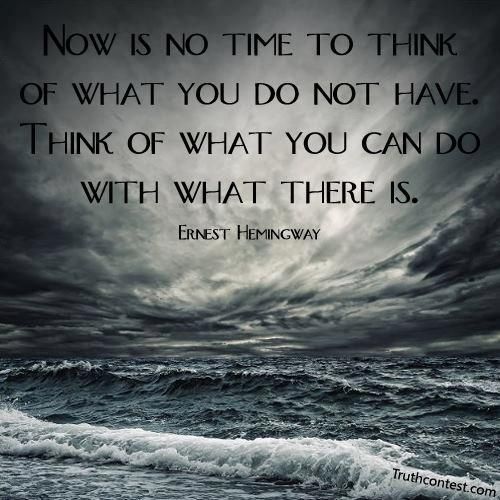
This doesn’t mean the writer is not qualified for this style, it simply means their books and narrative are not suited to this style. You heard that right, I have come to realize that the so-called “writing style” has less to do with the author, and more to do with the story they are telling. J.K Rowling was descriptive because Harry is the previously oblivious character who is discovering all these new, alien things which he never knew existed. As a fish out of water, obviously he is absorbing a lot of details, precisely because he is absorbing them for the first time. But as the books progress, you won’t see Harry describe the school every time he walks down the hallway with vivid detail. Why? He is growing accustomed to this new world. These things aren’t unusual to him anymore, which is why he doesn’t stop to observe every stray candelabra or magic wand or stone carving. He walks by them unaffected, because he is a part of this world now rather than an outsider witnessing something new. Meanwhile, Ernest Hemmingway often crafted a certain archetype of characters, although there are exceptions. He wrote about the maverick character, or the retired lion, much like himself. Those characters saw things clear-cut and straightforward simply because they were meant to. It suited them. It was out of character for Santiago to gawk at the endless miles of ocean waves around him with childish awe and fascination. This wasn’t just an excursion, the sea was home for the old man, and it welcomed him with open arms.

The point is, these writers wrote the way they did because of whom they were writing about. This is where the entire concept of “writing-style” eviscerates. Yes, a writer may have a signature style. But if they do, they must ensure that all the stories they tell are suited to this particular writing style, because every story just cannot be told in the same flowery or colorless way. You have a story, or a scene, or a dialogue conversation in the works, but is your protagonist the kind of person who would stop and observe the butterfly in the grass and its delicate wings or the joy in the eyes of the children splashing in the fountain? Is your character the type who would look dismally upon every dead petal and describe it all as bleak, dark and ironic because his brain perceives it that way? Is your character the type who would make a mental note of every little detail and stray hair strand in a room and catch on every contemptuous bat of an eyelash; or is your character the type who is so absent-minded and fleeting that the world passes by them in a blurr, without having the mind to stop and describe anything?
“Linen bed sheets, bubbling and curling around me like foam, locking my body in a warm embrace slipping slowly away into the depths of my consciousness…”
Or…“linen bed sheets that chafe my arms, comfortable but too mushy, too close-knit and tight, too much…”
Both describe a person in bed under linen bed sheets, but both are distinct and personalized because of the unique “style” they possess. Ask yourself, while someone with a poetic, romantic, bubbly outlook and disposition would notice her bedsheets in the first way, a lethargic and jaded character might perceive the same situation differently.

So, does that mean writing style does not exist?
Of course it does. But the thing is, if you want to write about different people, you want to write different styles, different prose, different voices with each book you write. You are not writing things the way you see them, the way you describe them. In fact, you are seeing and describing things the way your character would. It’s so much easier to stop worrying about whether or not your style is original or impressive, and only ask yourself: would this person write this way? Would they describe it this way? Would they think and notice the world around them this way? Feel free to emulate your favorite authors, but make sure the style suits your character; because the truth is: you need to write from someone’s perspective. Even in third-person grammar, you must write things the way a certain character, preferably your protagonist, sees them. For example, ‘The Lunar Chronicles’ is a masterclass in personalized immersive description.
“Kai spun away, his hands clawed into his hair. Whatever product had been used to style it for the wedding was making it messier than usual, and stars, he looked good…Cinder smothered the thought, annoyed with herself.” (The Lunar Chronicles, Cress)
Would just about any third person narrator talk about Emperor Kaito this way? I mean, maybe, but…the point is, although it’s in the third person, Cinder’s specific thought-process reflects in the narration. Writing my own novel, I have found this to be the most crucial element of any scene or point-of-view narration I write. It’s not the words that give the description its color and character, nor the novelty of the syntax, nor the writer’s wit by itself. It always boils down to one thing: your character’s perspective.
So then that would mean: it’s not about your writing style, your voice, your prose, or your way of describing. It’s about your story. How simple is that?


 Story Scientist
Leave a Reply to Anonymous Cancel reply